

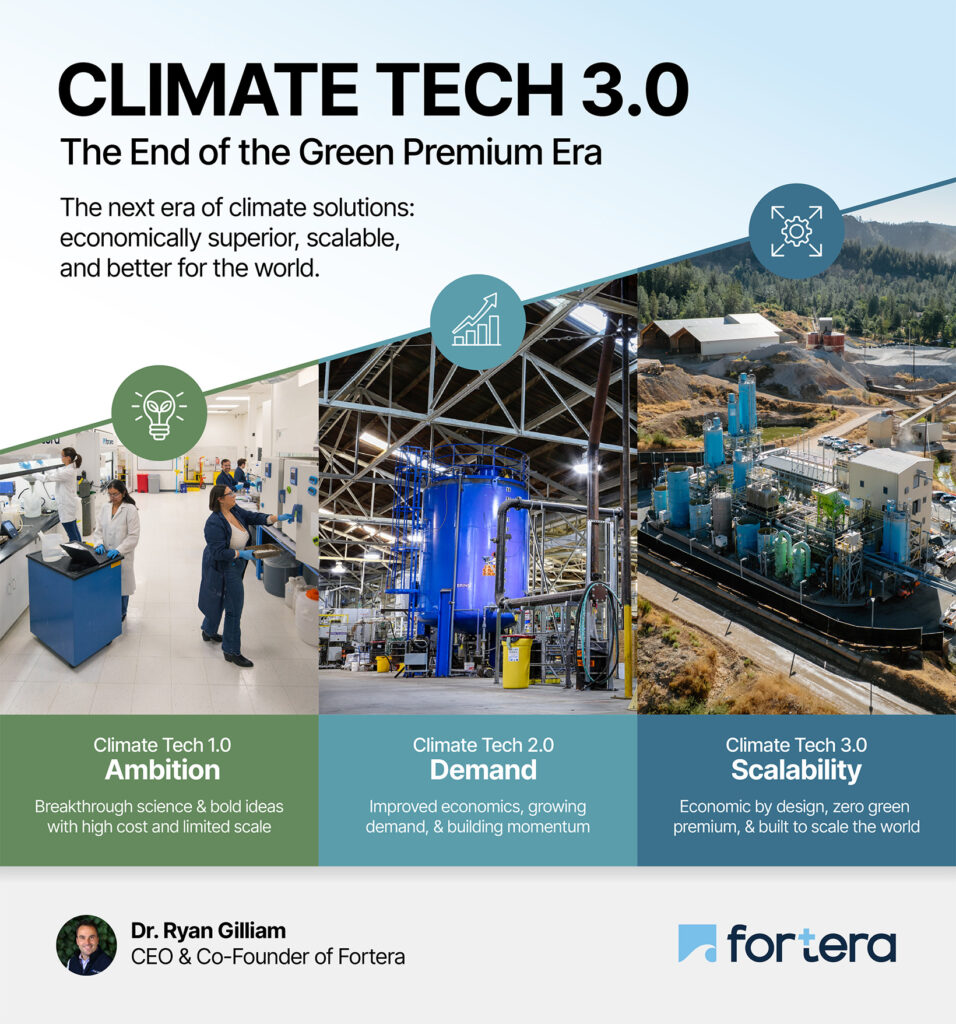
I have spent the last two decades in climate tech. From founding companies in energy and materials, to working in venture and reviewing hundreds of companies in the space, to persevering through the many ups and downs of the industry, I have remained steadfast in my belief that there are economic ways to make energy and products that are also better for the world.
Recently, I was asked whether Climate Tech 2.0 has reached its limits and what the next chapter of climate innovation will look like. It was the kind of question that deserves more than a quick answer, so I decided to put my perspective into writing.
To me, the challenge has never been a lack of solutions. The challenge is that many of the proposed solutions are fundamentally dependent on 24/7 access to cheap green energy, large green premiums, capital grants, tax incentives, or other forms of support to make the economics work.
That is not to say subsidies and incentives do not make sense. Almost every transformative technology requires support to move down the cost curve and achieve scale and bankability. Just look at wind and solar. But many of the technologies that have been funded over the last decade require those supports in perpetuity. To me, that distinction will define Climate Tech 3.0.
For the better part of two decades, climate technology has evolved through distinct phases. Let’s talk through them…
Climate Tech 1.0 was defined by Ambition.
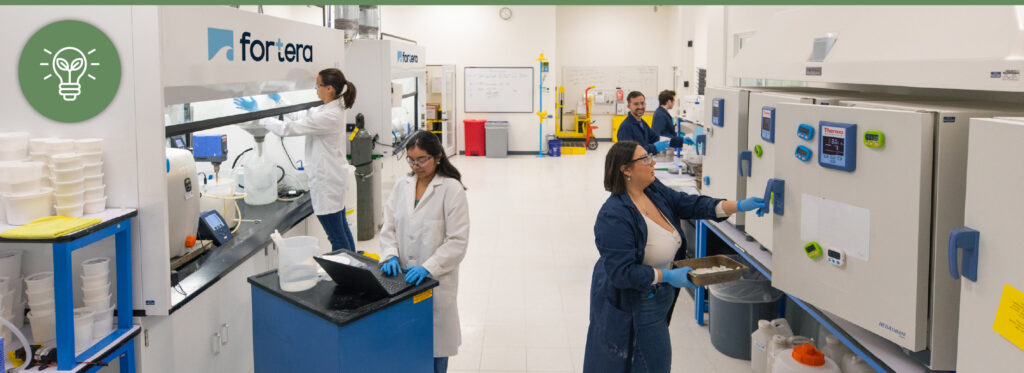
Bold ideas attracted capital on the promise that breakthrough science could transform entire industries.
Many of those technologies advanced our understanding of what was possible, but the gap between laboratory success and commercial deployment proved much wider than expected. Technologies took longer than anticipated to move from the lab to demonstration and then to commercial scale. Capital costs were significantly higher than projected, driven by both the novelty of the technologies and the scale required to achieve competitive operating costs.
Ultimately, the market delivered a clear verdict: customers were unwilling to pay a premium simply because a product was greener.
Climate Tech 2.0 was defined by Demand.
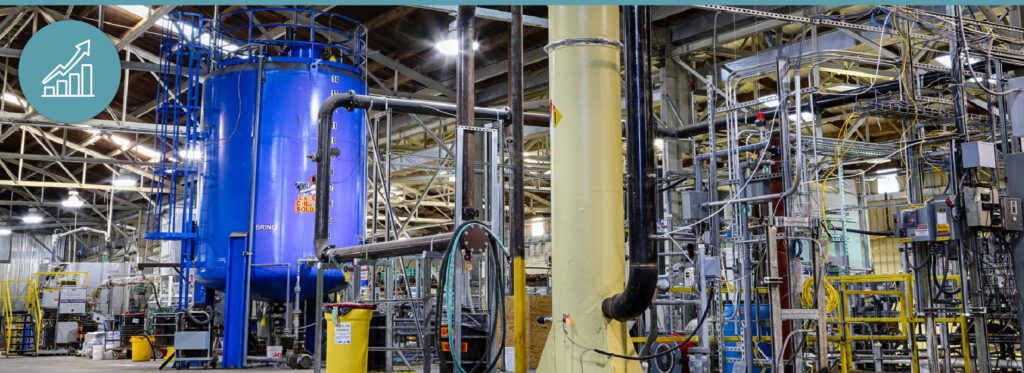
It brought significantly more capital, urgency, and institutional support. Governments established incentives, corporations announced net-zero commitments, and investors poured billions into startups addressing emissions across virtually every sector of the economy.
The industry matured. Technologies moved from research to demonstration. Entire ecosystems emerged around decarbonization.
But a familiar challenge resurfaced: economics.
Too many technologies still depended on favorable policy environments, premium pricing, or ongoing subsidies to compete.
I believe we have now entered Climate Tech 3.0
In this phase, technologies that require permanent subsidies, premium pricing, or continuous policy support will struggle to achieve the scale necessary to materially impact global emissions.
The winning technologies will be economically superior technologies that happen to be greener and not greener technologies that require customers to accept economic tradeoffs.
The new standard will be zero green premium.
Technologies will need to deliver performance advantages, competitive economics, and solutions to other customer pain points. The technologies that scale globally will be those that lower emissions while simultaneously reducing costs, improving performance, increasing resilience, or all three.
This is not a retreat from climate ambition. It is an acknowledgment of reality.
The world does not decarbonize through niche adoption. It decarbonizes when sustainable solutions become the preferred economic choice.
The benchmark that will define Climate Tech 3.0 is Scalability.
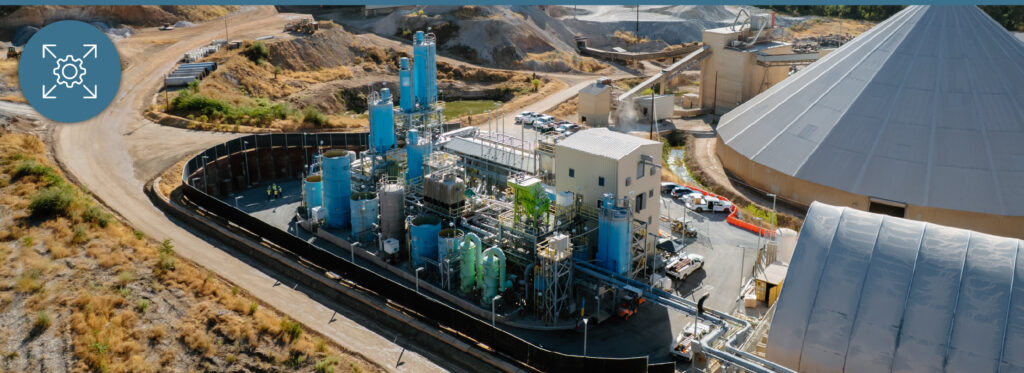
Historically, the more novel, complex, or scientifically interesting a technology was, the more investable it often became. The focus was on new chemistries, new materials, and entirely new industrial processes.
Don’t get me wrong. We absolutely need innovation!
But innovation cannot come at the expense of scalability.
Too often, I review companies that are fascinating academic concepts. Technically, the science works in a laboratory. But the process relies on prohibitively expensive catalysts, new feedstocks that are laden with hidden costs, specialized materials of construction, low yields that require orders-of-magnitude improvements, or operating conditions so precise that scaling becomes extraordinarily difficult.
Many of these companies have historically been able to attract seed funding, build pilot plants, and even raise significant venture capital. But the critical question going forward will be different:
▪ Can the technology realistically scale into an economically competitive business without a green premium?
▪ Are the supply chains in place?
▪ Can it leverage standard equipment that has already achieved scale in other industries?
▪ Are the regulatory pathways clear?
▪ Will customers adopt it?
▪ Does the required scale fit within existing markets?
▪ Can facilities be operated without requiring teams of PhDs to keep them running?
These questions are becoming just as important as the underlying science itself. I believe the climate sector is entering a period where scalability is becoming as important as innovation.
VCs are becoming more disciplined. Customers are becoming more pragmatic. And firsthand, I have seen capital markets become increasingly selective.
Technologies that cannot demonstrate a credible path to mass deployment will face growing scrutiny, regardless of how compelling the science may be.
Many climate innovations originate in universities and research institutions, where the focus is understandably on proving what is technically possible. But the commercial world operates under a different set of constraints.
A technology that reduces emissions by 90% could possibly be valuable.
A technology that reduces emissions by 90%, lowers costs, and can be deployed across thousands of facilities is transformative.
For Climate Tech 3.0, I believe entrepreneurs and investors must evaluate technologies through the lens of industrialization from day one.
Questions around feedstock availability, manufacturing capacity, deployment timelines, customer adoption, and cost curves need to move much earlier in the development process.
The most successful climate startups will be those that think simultaneously like scientists, engineers, operators, and economists.
At Fortera, we are living this focus every day.
More to come on that in future posts.

